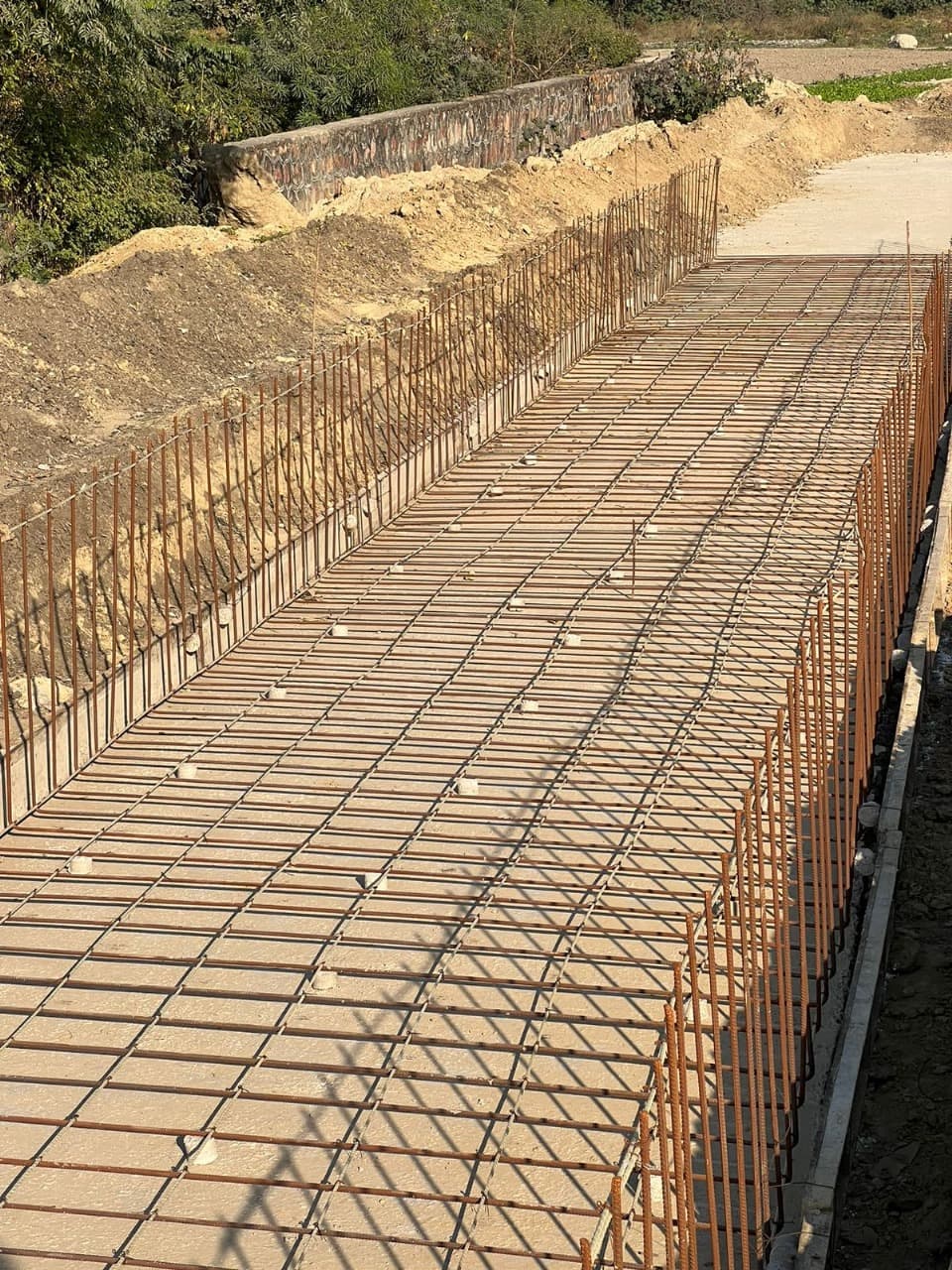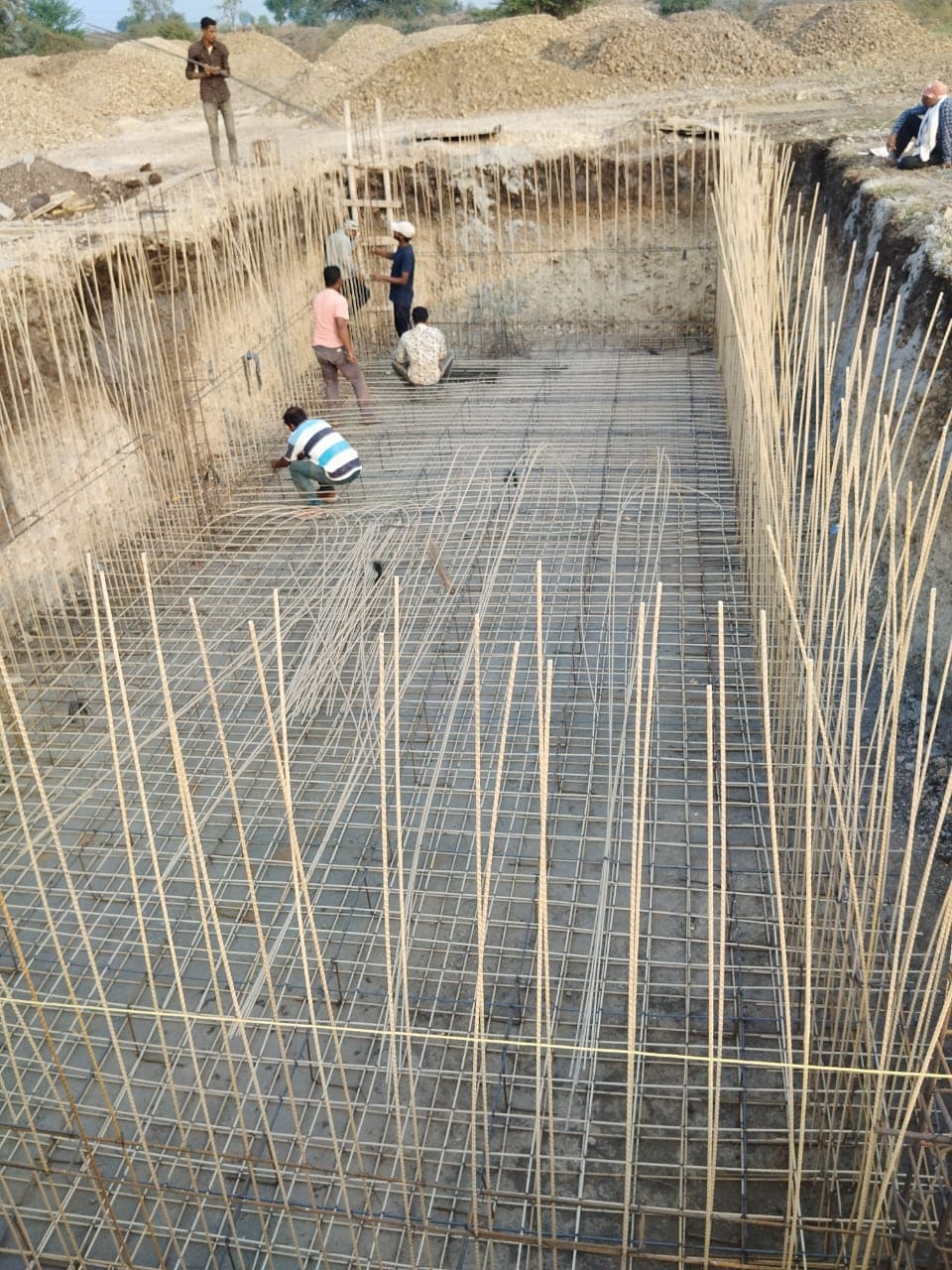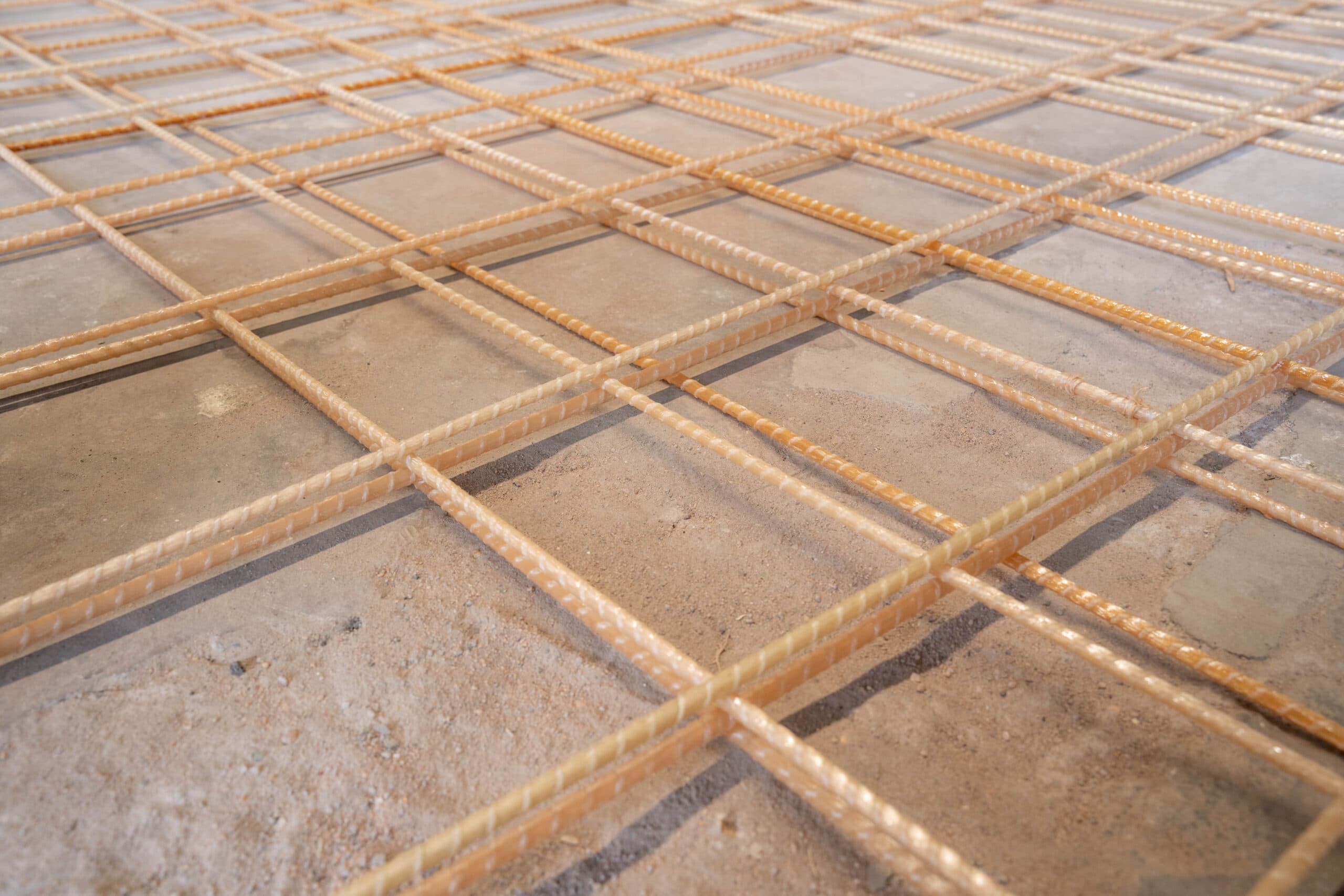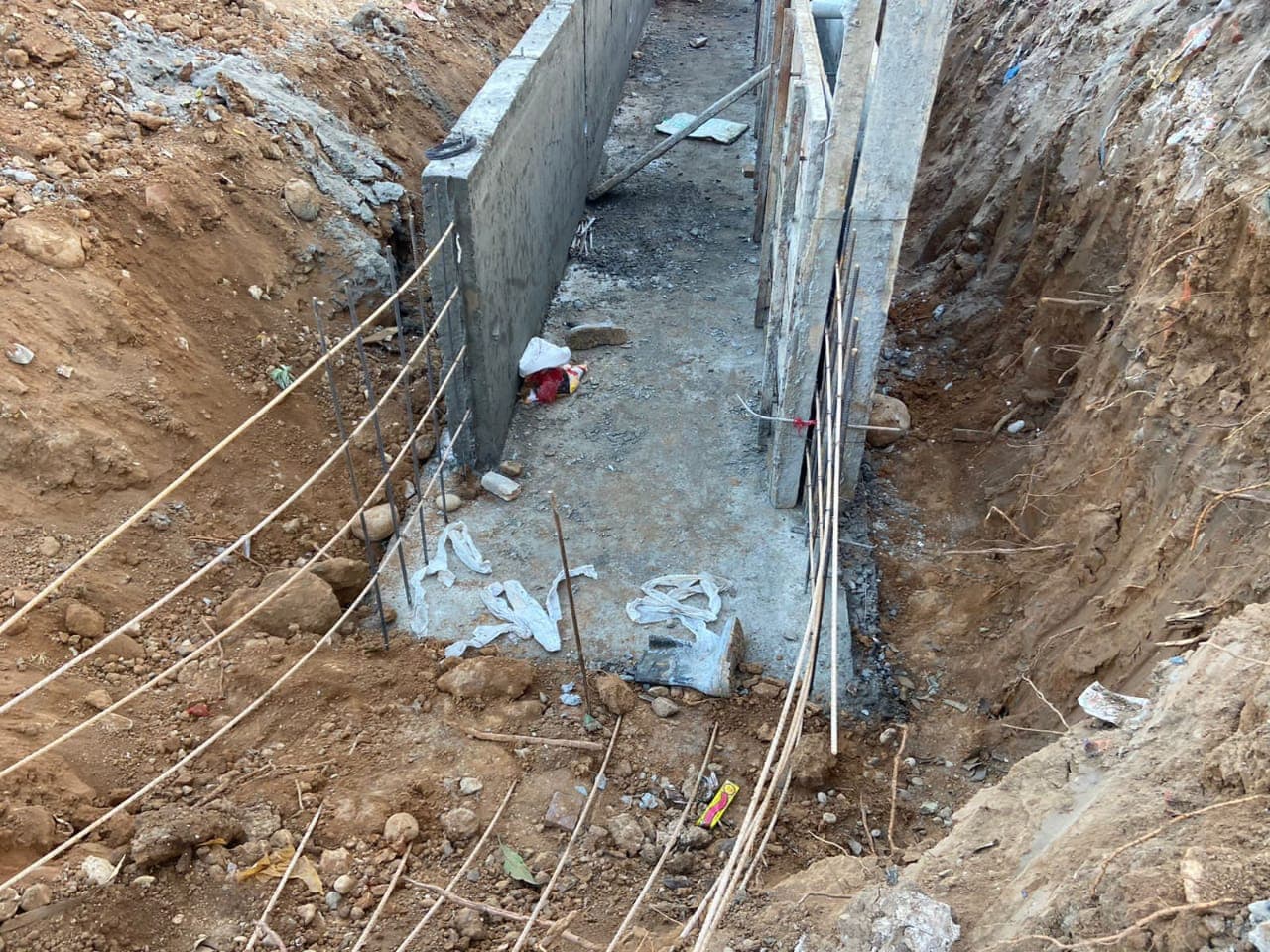
GFRP Rebar for Industrial Flooring
Floors that take the load and the chemistry.
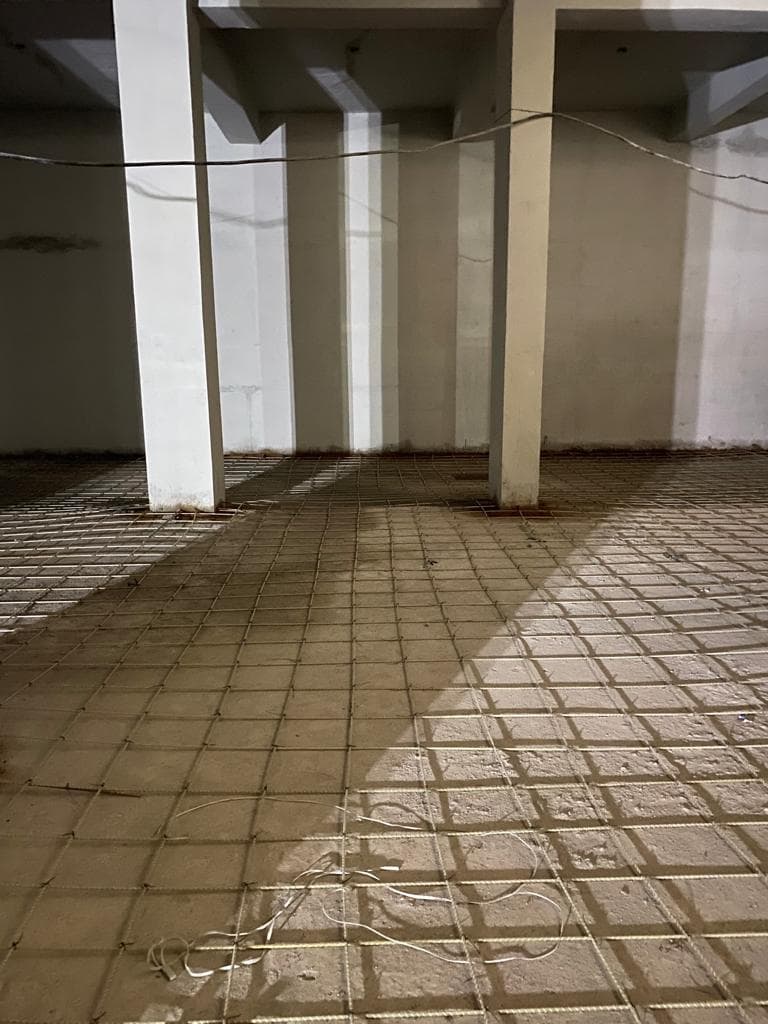
Warehouse and factory floors face forklift loads, water, and spilled chemicals — and often need to be non-conductive. Endurobar mesh reinforces them without any corrosion risk.
The Problem With Steel
Why steel lets these structures down
In this environment, corroding steel reinforcement is the single biggest threat to durability. Here's what goes wrong:
- Water and chemical spills corrode floor-slab mesh and reinforcement.
- Rust expansion cracks slabs and lifts surface finishes.
- Conductive steel is unsuitable near sensitive equipment.
- Slab repairs halt operations and cost heavily.
Why Endurobar Wins
Five reasons GFRP is the right call here
Corrosion Resistant
Never rusts and is fully compatible with water — no staining, spalling or cracking.
Chemically Inert
Unaffected by chlorine, salts, sulphates and treatment chemicals that destroy steel.
Non-Conductive
Carries no electrical current — a critical safety property near water and equipment.
2× The Strength
Roughly double the tensile strength of steel, so you reinforce with less material.
4× Lighter
A quarter of steel's weight — faster placement and far lower handling cost.
Where It Fits
Ideal for every variation
Warehouse slabs
Large-area floor slabs reinforced with corrosion-free mesh.
Factory & process floors
Chemically exposed floors that stay sound for decades.
Cold-storage floors
Low-temperature, high-humidity floors immune to corrosion.
Equipment & MRI rooms
Non-conductive, non-magnetic slabs for sensitive facilities.
GFRP vs. Steel
The performance gap, measured
Endurobar GFRP
Glass Fibre Reinforced Polymer
Conventional Steel
TMT / Metal Rebar
Frequently Asked
Good to know
Yes — we supply pre-tied GFRP mesh sized to your slab design, lighter and faster to place.
GFRP is inert to most industrial chemicals, making it ideal for process and ETP floors.
GFRP is dielectric and non-magnetic — essential near MRI, transformers and calibration equipment.